


I want you to picture AI search as a bouncer.
Not the kind who cares how cool you say you are.
The kind who looks at you and goes: “Got any references?”
That’s the shift this new University of Toronto study nails with actual numbers.
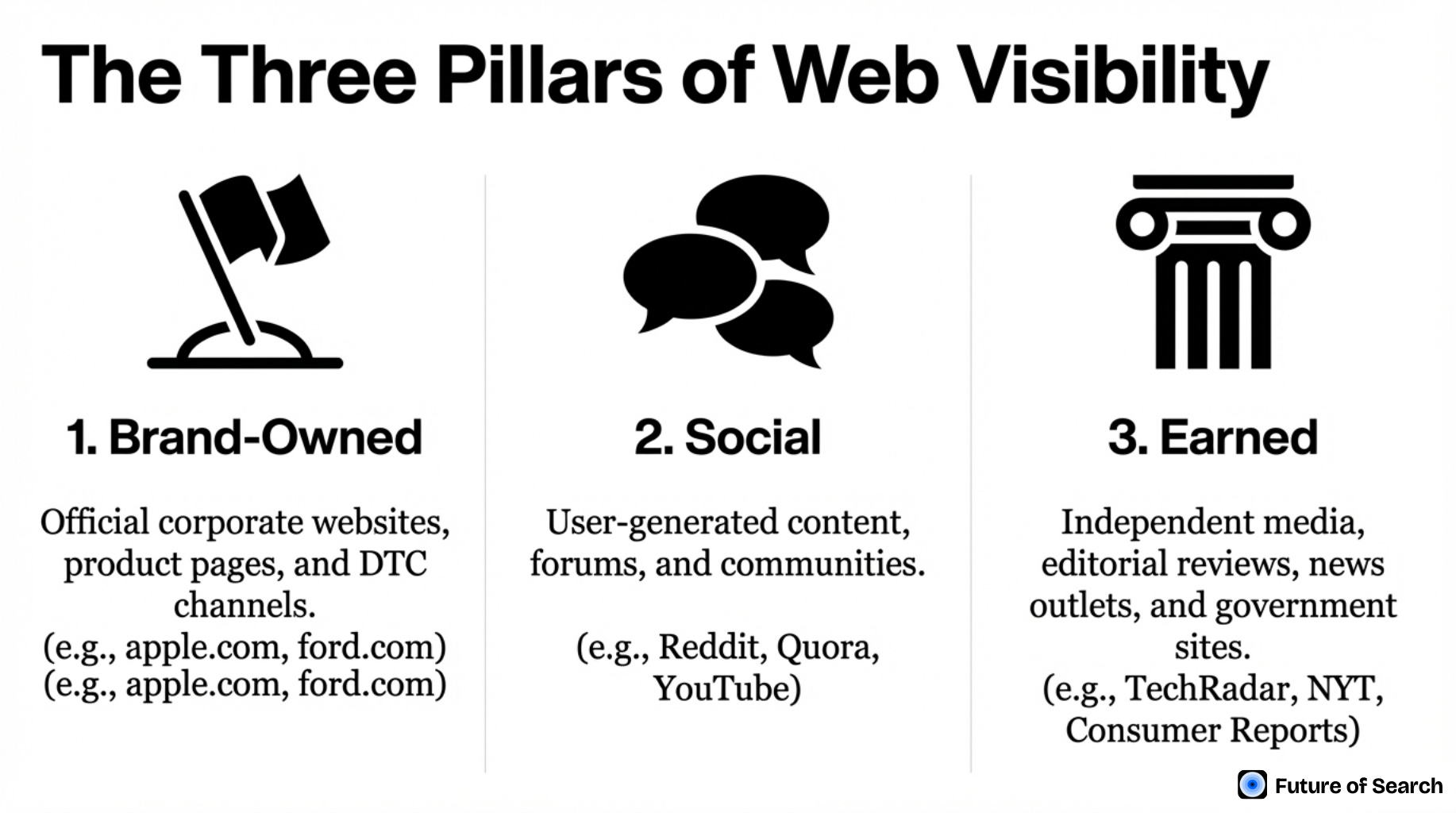
Generative AI search engines don’t just rank pages. They construct a case. And when they need receipts, they overwhelmingly prefer earned media—third-party reviews, editorial, institutional sources—over brand-owned sites and even over social.
In other words, your website is more a claim than ‘proof’
And, AI search engines are becoming claim-skeptical machines.
About the study
The paper is called “Generative Engine Optimization (GEO): How to Dominate AI Search” by Chen, Wang, Chen, and Koudas. It’s one of the cleanest “first maps” I’ve seen of how AI search differs from Google.
They run large, controlled experiments across multiple AI search engines (ChatGPT, Perplexity, Gemini, Claude), multiple verticals (consumer electronics, automotive, software, local services), multiple regions, multiple languages, and paraphrases of the same intent.
Then, they analyze which domains get cited, what kind of domains they are (Brand vs Earned vs Social), how stable the citations are across language and phrasing, how fresh the sources are, and whether big brands get default advantage.
This matters because we’re moving from “SEO = rank a page” to “GEO = become the obvious recommendation inside a synthesized shortlist.”
And, shortlists behave differently than SERPs.
“Earned media bias” is structural
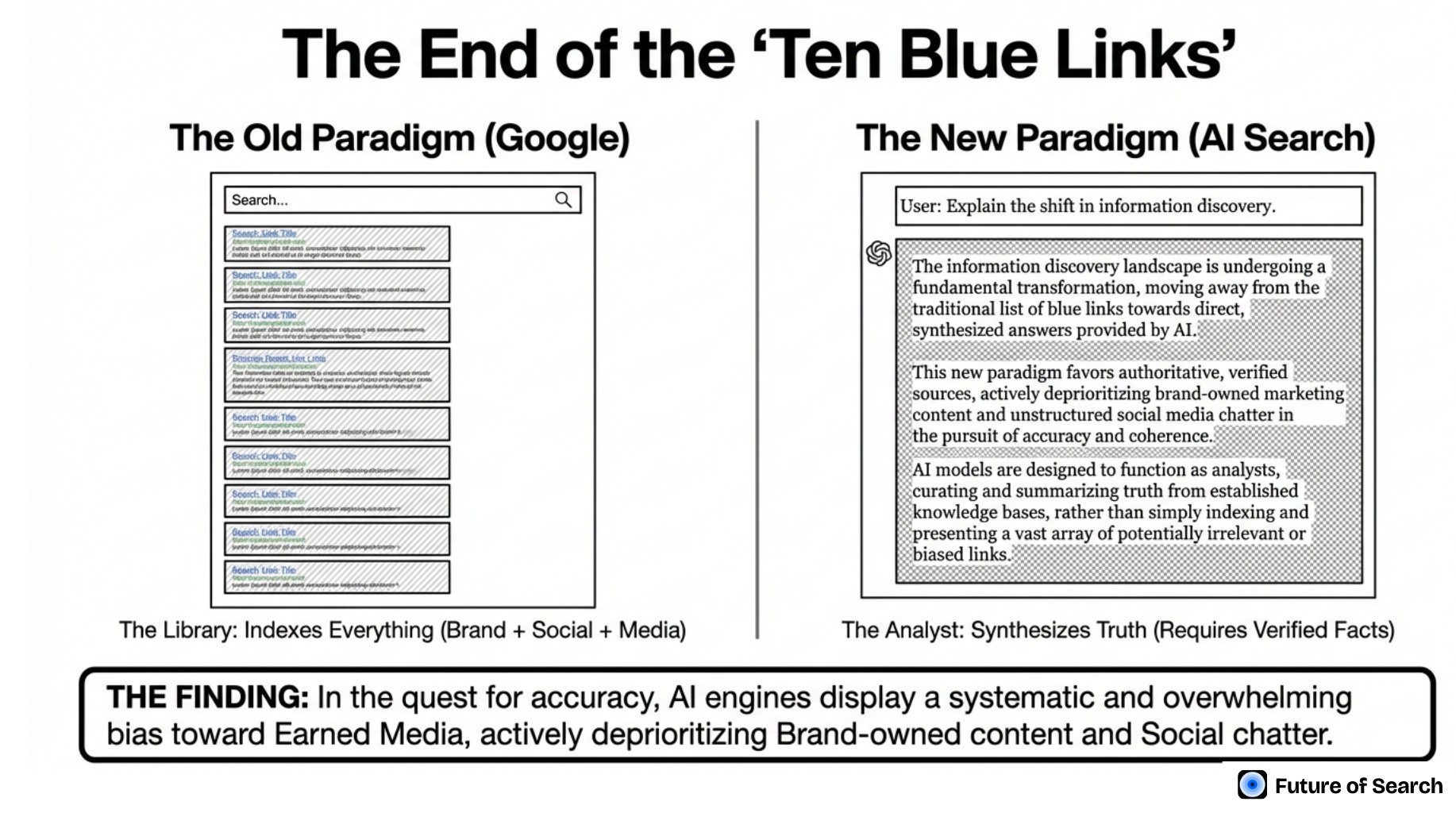
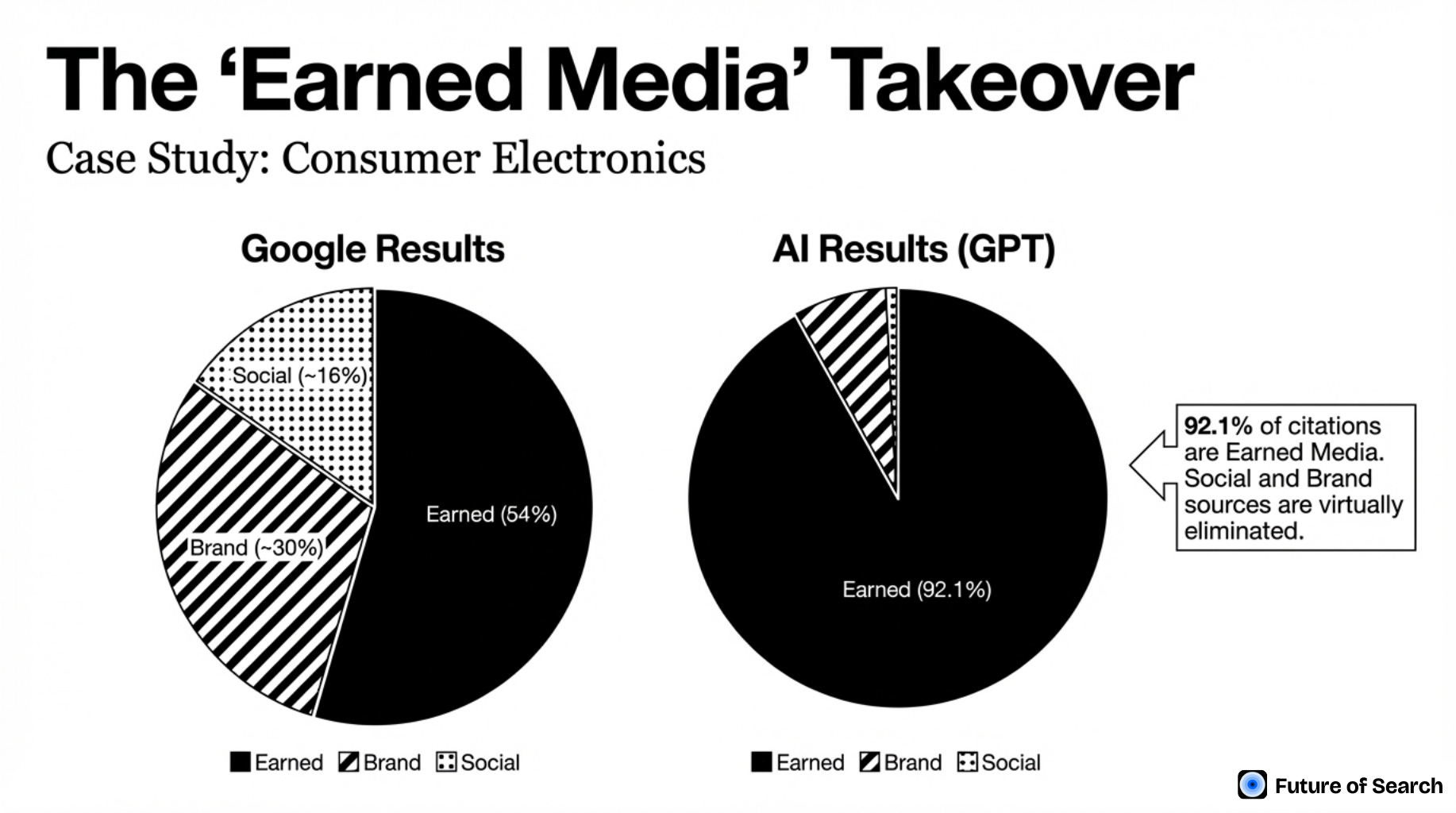
Across their experiments, AI search engines show a systematic and overwhelming bias toward earned media.
Google is a mix of brand sites, earned editorial and reviews, and social/forums (especially Reddit).
AI search, especially ChatGPT and Claude, behaves more like: Earned ≫ Brand ≫ Social. And Social often drops to near-zero.
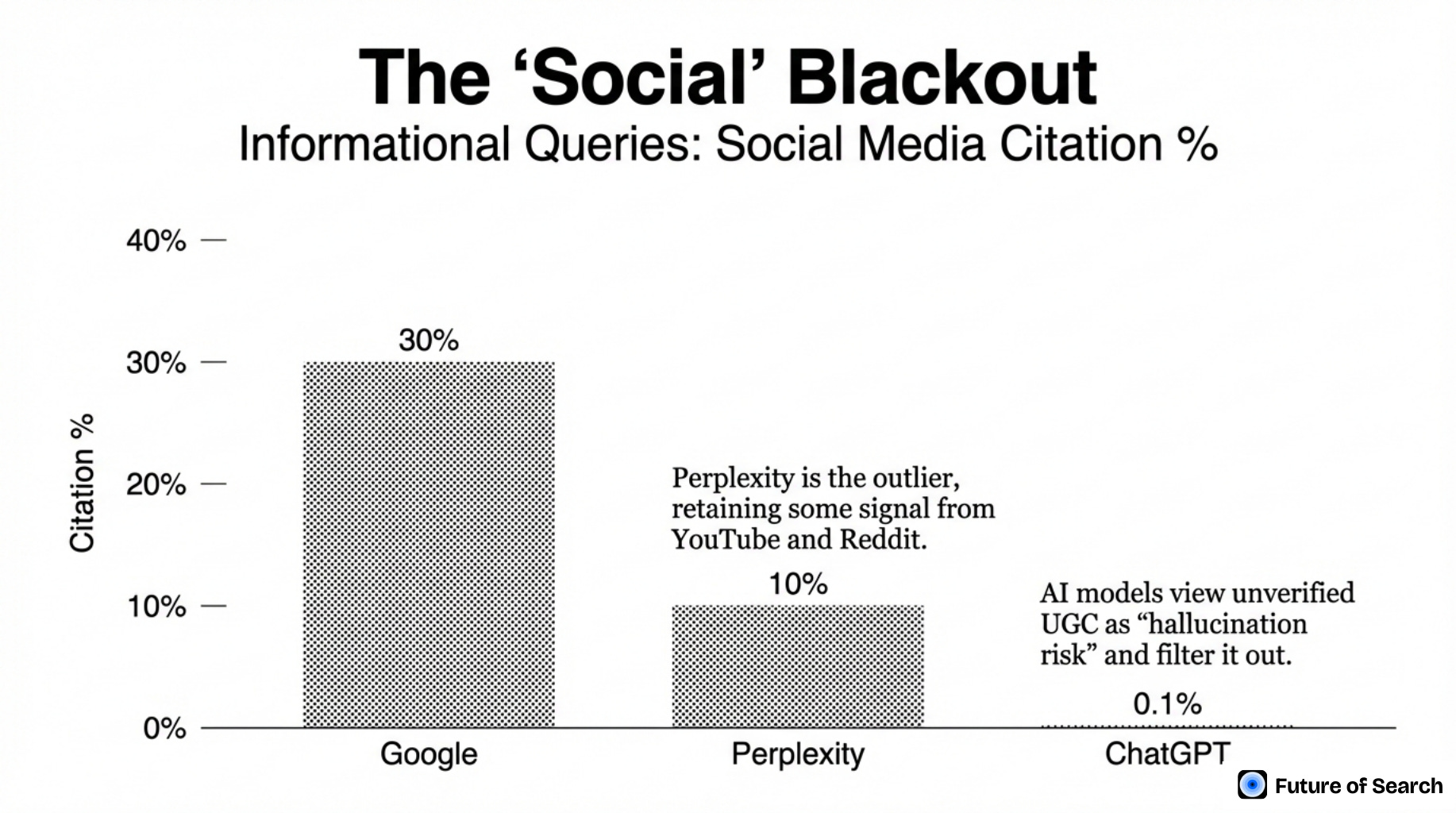
Take automotive prompts in the US and Canada. When they compared Google vs AI search: Google still included meaningful social content. AI search frequently returned 0% social. Earned media share ballooned dramatically.
So if your growth engine is “community love”—Reddit, forums, UGC, creator buzz—some AI engines barely treat that as valid evidence.
Why is this happening?
Google is a catalog. AI search is a verdict.
Google can show you 10 options and let you decide. AI search has to pick a handful of things and explain itself.
This reality forces it into a behavior pattern that’s incredibly important for marketers to understand.
AI search optimizes for defensibility.
Earned media is defensible. It’s independent, sounds neutral, already structured as comparisons and recommendations, and has easy-to-lift verdict language like “best for X” or “top pick” or “worth it” or “avoid if...”
Brand sites are harder. They use marketing language, make claims without third-party validation, offer less comparative framing, and lean more “our product is great” than “here are tradeoffs.”
So the engine becomes an aggregator of legitimacy. This is a PR-first world, disguised as search.
AI engines aren’t one market
The paper shows the engines behave very differently from each other.
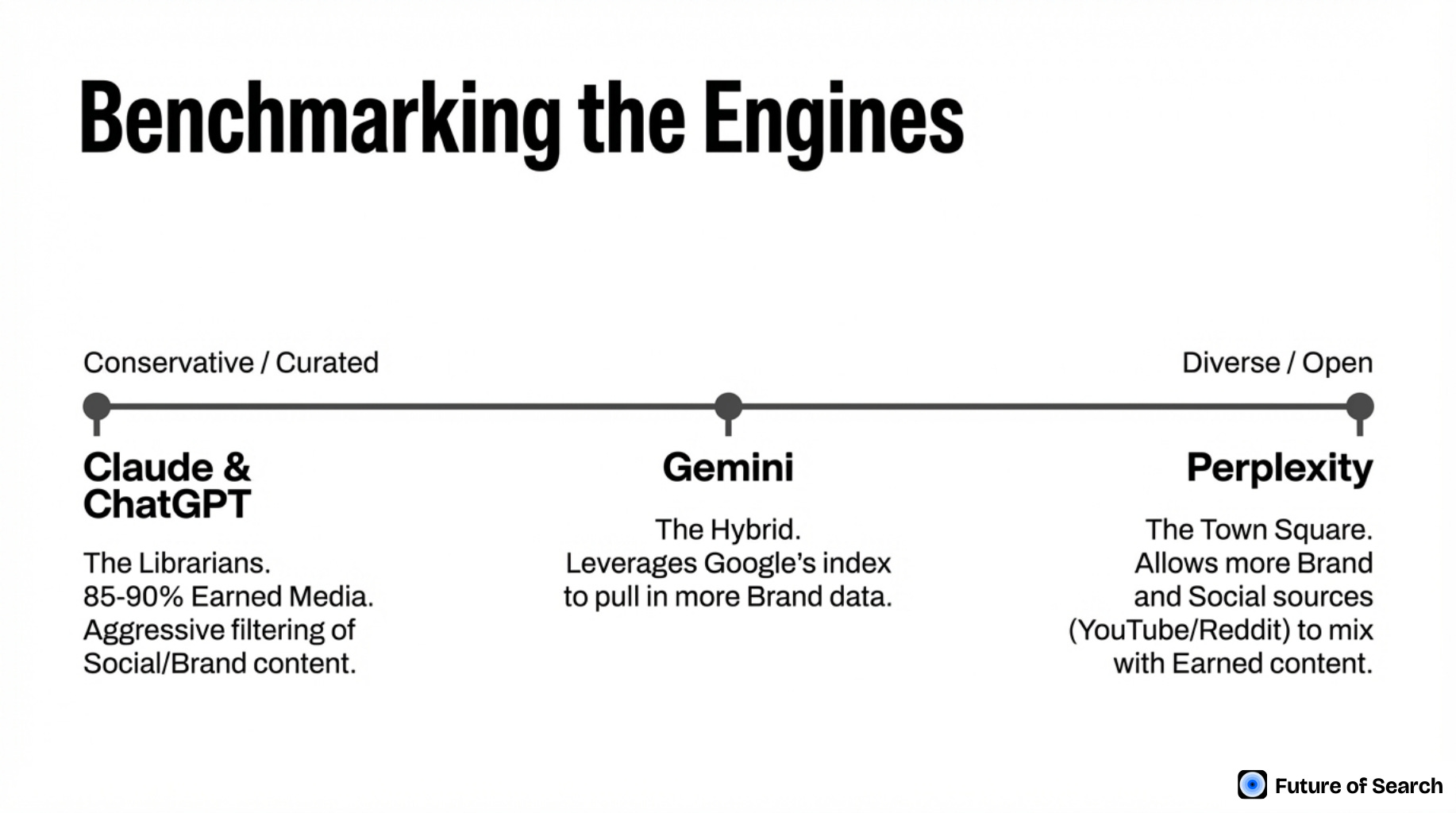
ChatGPT + Claude are earned-media purists. They lean extremely hard into third-party editorial and reviews, with minimal brand content and almost no social.
Perplexity is more of a blended ecosystem. It pulls in more social and brand sources, often including YouTube and retail.
Gemini is brand-friendlier. It includes brand sources more often than ChatGPT or Claude.
If you’re treating “AI search” as one channel, you’ll waste money. You need engine-specific distribution strategy the same way you’d plan differently for Google vs TikTok vs Amazon.
Big brand bias: unbranded prompts default to giants
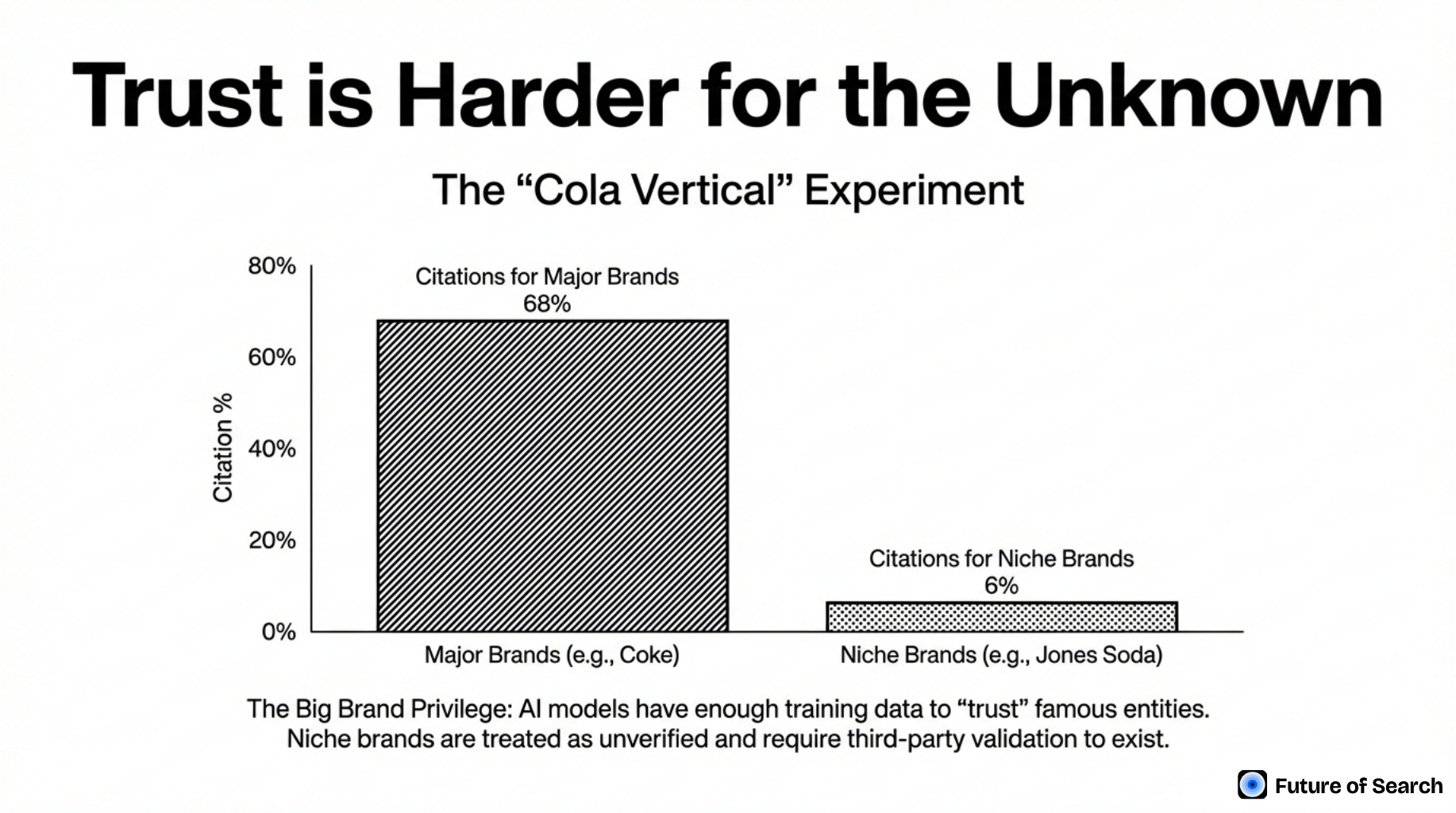
They also test something that feels obvious but is now measurable: When the prompt is unbranded (”best cola,” “top soda brands”), the models disproportionately surface major market leaders.
Niche brands show up, but far less frequently.
So if you’re not a category incumbent, your job isn’t just “be better.” Your job is: Create enough third-party proof that the model feels safe mentioning you.
How bias varies by vertical
Not all industries experience the same level of earned media dominance. The pattern shifts based on what kind of information AI models need to answer confidently.
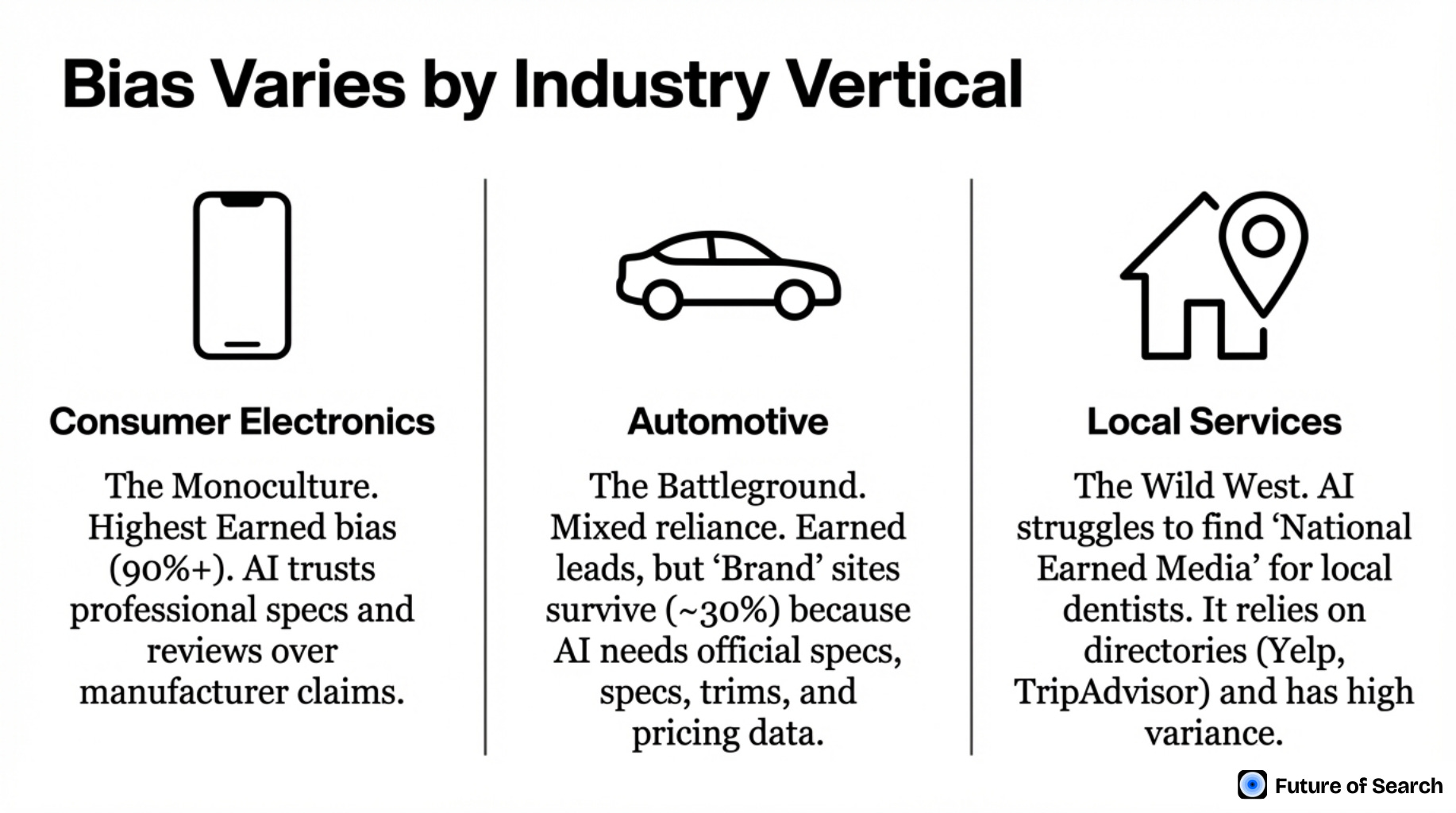
Consumer electronics shows the most extreme earned media bias (90%+) because AI trusts professional specs and reviews over manufacturer claims. Automotive is a battleground—earned media leads, but brand sites survive at around 30% because AI needs official specs, trims, and pricing data. Local services is the wild west, where AI struggles to find credible national earned media for dentists and plumbers, so it relies heavily on directories like Yelp and TripAdvisor.
Language matters more than wording
One of my favorite findings: Changing languages reshapes the entire citation ecosystem.
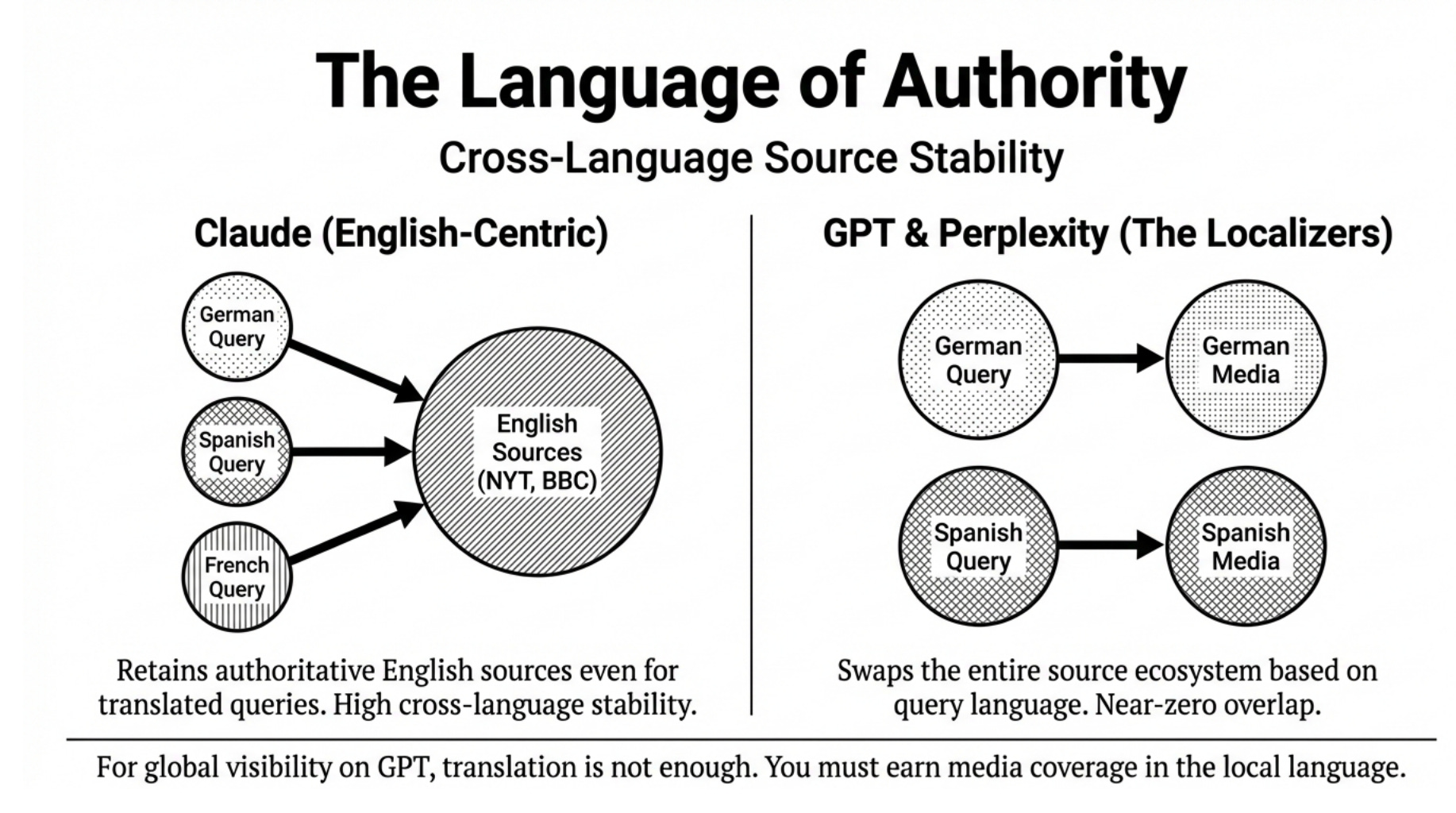
Some engines reuse similar authority sources across languages. Others basically switch the entire evidence universe when you ask in German vs English.
Meanwhile, paraphrasing (”give sources,” “rank them,” “use quotes”) shifts citations less than translation.
That means: If you want international visibility in AI search, “translate the page” is not a strategy. You need localized authority—earned coverage in the target language ecosystem.
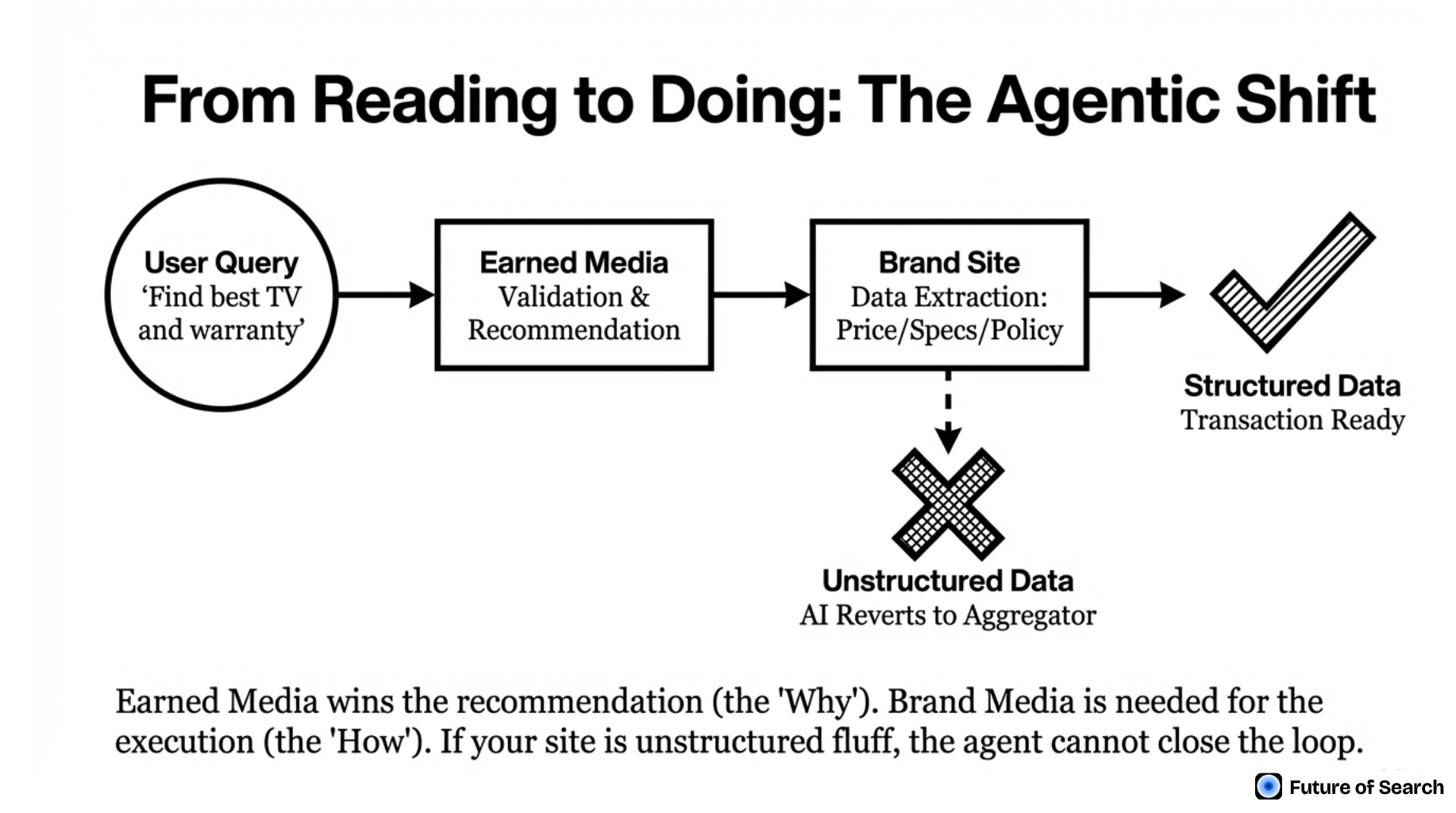
Moving from reading to doing
So what do top marketers do about it?
Here are the moves I’d make if I was a CMO trying to win “the earned media filter.”
Treat earned media like performance marketing. PR can no longer be “brand awareness.” It’s now a direct input into whether AI systems will recommend you. The KPI isn’t impressions. It’s: Do we appear in the citation network for our category?
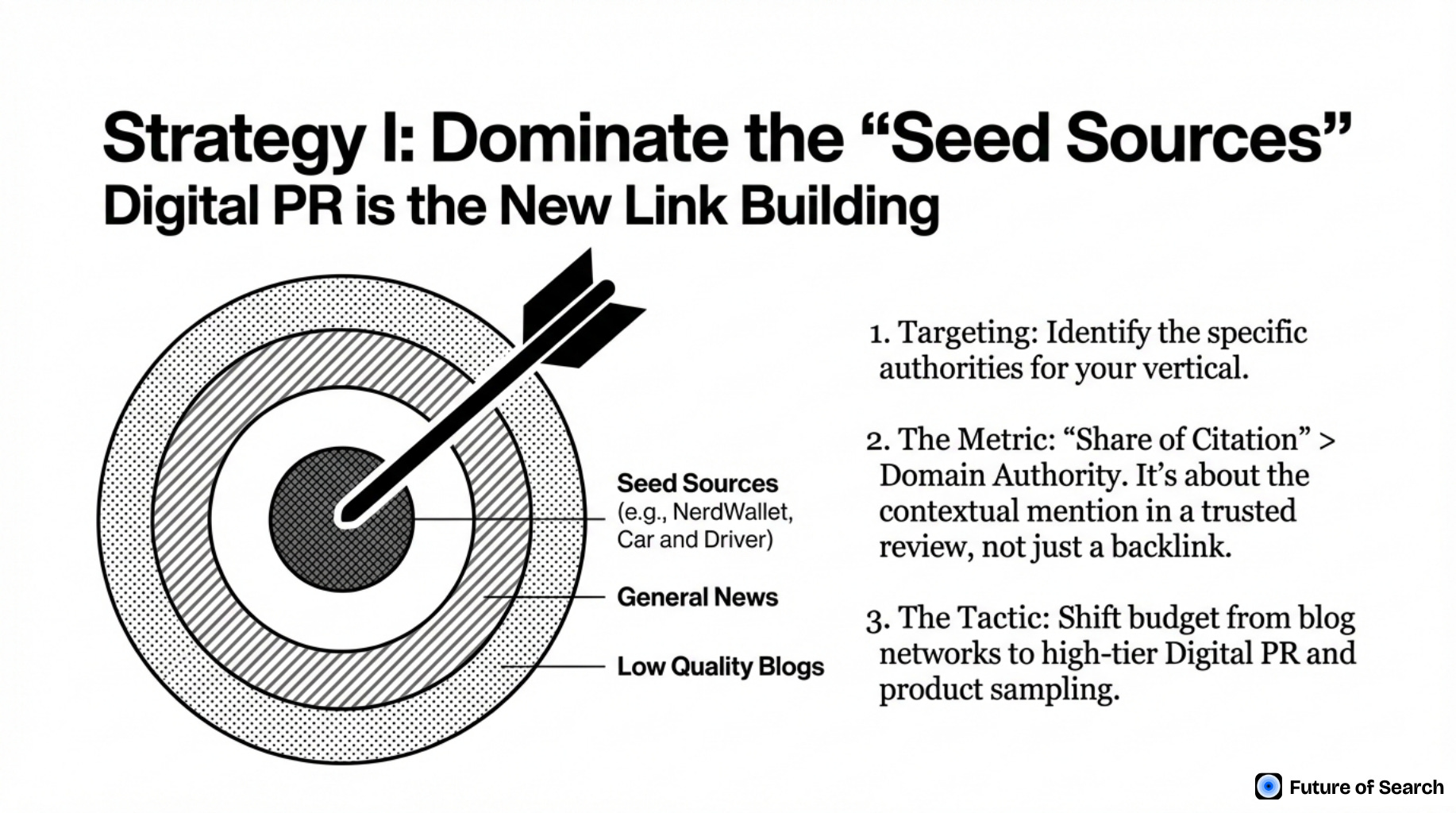
Build your “citation map.” Pick 30–50 prompts that represent your category—things like “best X for Y,” “X vs competitor,” “most reliable,” “best value,” “top tools for [persona].” Run them through the engines that matter. Then list the domains cited most often, which ones show up repeatedly, which ones show up only for certain personas or regions or languages. Those repeat domains are your kingmakers. Now your PR roadmap becomes obvious: get covered there, get reviewed there, get included in listicles there, build relationships there.
Create “justification assets.” AI search builds shortlists with reasons. So give it reasons it can steal cleanly. On your site, build pages that are scannable, structured, and explicit about tradeoffs. Think “Best for ___” pages with constraints, comparison tables, pros/cons lists, “Who this is for / not for” sections, pricing and policy clarity. If the model can’t extract a clean justification in 5 seconds, you won’t make the shortlist.
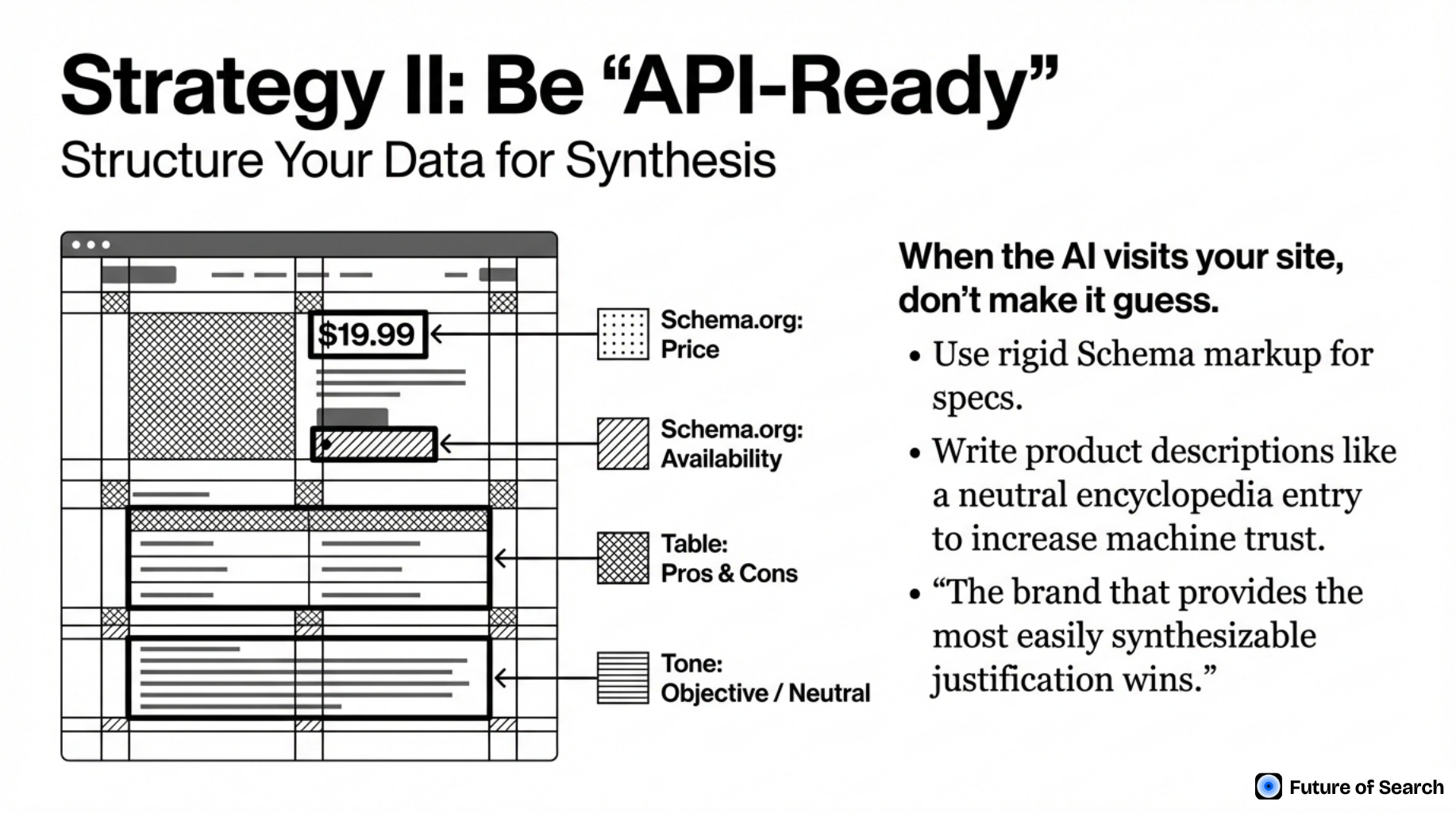
Make your brand “API-able.” This is the least sexy but most important idea in the paper: AI agents need clean data. So treat your site like it’s being read by a machine that will pull your specs, parse your pricing, summarize your warranty, compare you to others, and quote your claims back at users. That means rigorous schema, clean HTML structure, fewer fluff blocks, clear tables for specs and features, and explicit claims tied to proof.
Niche brands: stop trying to win “best overall.” If you’re not a giant, “best overall” is a trap. The model defaults to market leaders because it’s safe. Your winning lane is: best for a narrow, specific, defensible context. Best for small teams. Best for ADHD brains. Best for photographers traveling weekly. Best for people who hate subscriptions. Then you go dominate earned coverage in that niche—specialty publications, creator reviews, expert roundups, and community credibility.
The big point
In the old world, your website was the product.
In the new world, your website is the brochure. The product is your reputation graph.
And AI search is reading that graph with a bias: “Don’t tell me you’re great. Show me who else says so.”
If you want to win AI search in 2026, don’t just optimize pages. Optimize proof.
—Aaron
Become a master pitcher & inventor – the fun way
Products: The Card Game: Get my game where ‘Shark Tank’ meets Apples to Apples.
Wanting to stay ahead in search? Get my FREE AI Visibility Chrome Extension.
Aaron’s AI Visibility Extension: I wanted a simple way, right inside the browser, to see: “If an AI model or search engine reads this page, what does it actually see?”
Share the newsletter and get rewards.
Refer friends for rewards: Get cool rewards (like my card game) for referring people to my newsletter. Check out where you stand on the leaderboard.
Interesting. I understand how this disrupts the SEO game, but having trusted sources should be a good thing. And if you are not doing anything significant enough to earn media, then perhaps you don't deserve it!! Time to really innovate and deliver new value that no one else does--that would be new (earned media) worthy!